
One stick of butter is not 'one cup' in every kitchen
My brown butter cookies failed in Berlin because I bought a 250 g block and used 'half a package' like I would half a US stick.
We bake in metric kitchens with American cookbooks — the failures are always butter and flour, never the oven.
American baking recipes assume quarter-cup markings on the butter wrapper and sticks that weigh 113 g (4 oz). Walk into a European supermarket and butter is a 250 g slab with no cup lines. Same ingredient, different packaging, and brown butter cookies that spread like pancakes if you eyeball it.
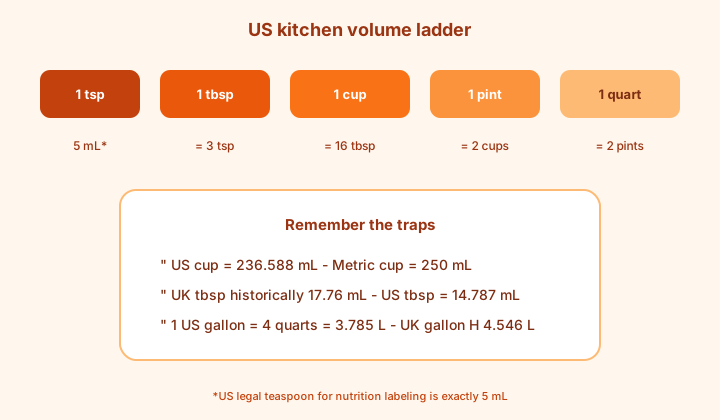
The numbers that actually match recipes
1 US stick = 8 tbsp = ½ cup = 113 g (4 oz) > 1 US cup butter = 226 g (2 sticks) > 1 EU block = 250 g (≈ 1.1 US cups) > 1 tbsp butter ≈ 14 g
Salted vs unsalted does not change the weight much — a gram or two of salt per stick. What changes is water content in European vs US butter (often slightly higher fat in EU 'dry' butters). For cookies and pastry, weight still beats volume.
Worked example — '½ cup butter' on holiday
Recipe calls for ½ cup butter.
½ cup = 113 g exactly (one US stick). > On a scale: tear a bowl, add butter until 113 g. > Without a scale: 8 tablespoons from a US stick, or cut a 250 g EU block to roughly less than half (113 g is 45% of 250 g — a bit under halfway if you cut visually).
If the recipe says '1 stick' and you only have 250 g blocks, use 113 g and save the rest for another bake. Do not use 125 g because 'half of 250' — that is 12 g extra fat, enough to change spread in cookies.
Table — common butter amounts
| Recipe says | Grams | US sticks | Tablespoons |
|---|---|---|---|
| 2 tbsp | 28 g | ¼ stick | 2 |
| ¼ cup | 57 g | ½ stick | 4 |
| ½ cup | 113 g | 1 stick | 8 |
| ¾ cup | 170 g | 1½ sticks | 12 |
| 1 cup | 226 g | 2 sticks | 16 |
| 250 g EU block | 250 g | 2.2 sticks | ~17.5 |
Brown butter and other traps
Brown butter recipes often say 'brown one stick' then add milk solids back. You lose water when browning — the fat weight stays roughly 113 g but volume shrinks. Weigh after browning if the recipe gives a gram target; if it only says 'one stick browned', start with 113 g before the pan.
Coconut oil swaps: 1 cup coconut oil is not 226 g — it is about 218 g and behaves differently in the oven. Substitute by weight from a table, not by cup.
When cups are still fine
Melting butter for a sauce: ±10 g does not matter. Coating a pan: same. Anything where structure depends on creaming butter with sugar — weigh.
Pocket recap
Half cup butter = 113 g. Full cup = 226 g. EU 250 g block ≠ one cup. Buy a scale; it is the cheapest fix for American recipes abroad.
Try the converters mentioned in this article
FAQ
How many grams is one stick of butter?+
113 g (4 oz) in the US standard stick. Some artisan brands print 115 g — check the wrapper.
Is European butter the same weight per cup?+
Weight per cup is still ~226 g if you pack the same volume, but EU butter often has slightly higher fat and less water, which changes how dough feels even at the same gram weight.
Can I use margarine with the same grams?+
Same weight often works for volume baking, but water and fat percentages differ. Cookies spread more with some margarines. Treat as a deliberate substitution, not a silent swap.
What about butter in grams on UK recipes?+
UK recipes increasingly use grams. 250 g is a common pack size there too. US stick math (113 g) still applies when you are translating American sources.
This article was written by The Turbo Unit Converter engineering desk (Culinary metrology) and last reviewed on 2026-07-28 against NIST SP 811 and the BIPM SI Brochure. Read our full editorial policy.